

Portfolio's Debt Was Priced for a Market That No Longer Exists
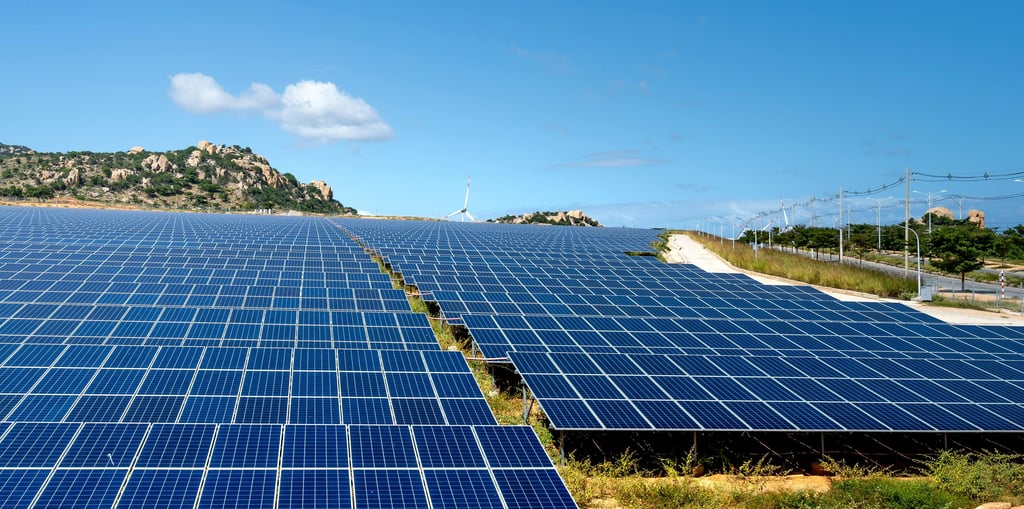
The collision between permanent solar capture price compression and a concentrated $300–580 billion debt maturity wall cresting in 2026 is converting operationally healthy utility-scale renewable portfolios into structurally impaired capital positions at the exact moment sponsors lose control of the refinancing timeline.
The mechanism: Zero-marginal-cost cannibalization has permanently collapsed solar capture prices 40–68% below 2016–2018 project finance underwriting assumptions across Germany, Spain, and Chile. Simultaneously, the 7–10 year debt facilities financing that construction vintage mature in concentrated volume through 2026–2028, forcing lender re-underwriting at current capture prices. Rising capital costs compress DSCR from the cost side as falling revenues compress it from the income side. Projects that appear operationally sound are structurally insolvent by the metric their lenders will apply and the credit committee that determines that outcome convenes 12–18 months before legal maturity, inside a window that is closing now.
The 2016–2018 utility-scale renewable construction boom is producing a concentrated debt maturity event in 2026, and the projects reaching that maturity are being re-underwritten against a revenue environment that has permanently collapsed 40–68% below the capture price assumptions their original financial models required. This did not arrive from outside the sector. The sector built it in and timed it to discharge at the precise moment its earliest large-scale assets require new capital.
In Germany, solar's generation-weighted capture price averaged 54% of system price across 2025 and hit 29.7% in May of that year, clearing at €19.97/MWh. The force behind that number does not reverse: every gigawatt added to a zero-marginal-cost grid suppresses market price during the hours that solar produces. Germany crossed 100 GW of installed solar capacity in 2025. Spain and Chile show the same compression dynamic executing across independent markets with no single-country policy instrument capable of stopping it. A project financed at a €55–65/MWh capture price assumption is now clearing €20/MWh at peak output hours. The original debt service model and the current operating reality have separated into two different instruments and only one of them is being reported to the board.
When Two Irreversible Conditions Occupy the Same Calendar Window
Between 2016 and 2018, renewable project finance closed in volume on 7–10 year debt facilities. Those facilities mature in concentrated mass through 2026–2028 confirmed at $300–580 billion in private infrastructure and green bond debt requiring refinancing across this window. Refinancing is not a rollover. It is a full reconstruction of the project financial model from current conditions. Every asset in that construction vintage now faces credit re-underwriting at structurally lower capture prices, inside a capital market where S&P Global's project finance surveillance already records negative outlooks outweighing positive outlooks three to one before the maturity wall crests.
DSCR deterioration here is not a single variable moving against the asset. Revenue is compressed by capture price cannibalization. Capital cost is elevated by the tightened financing conditions confirmed in the IMF's April 2025 Global Financial Stability Report and WEF's 2025 Energy Transition Indicators. The coverage minimum a project must clear has not changed. The gap between that minimum and what the current revenue environment supports has widened from both ends simultaneously. No operational improvement availability rate, O&M reduction, capacity factor gain closes a gap that two structural forces opened from opposite sides of the same equation.
What makes this fracture invisible inside the organizations it already inhabits is not analytical failure, it is architectural. Asset management teams are measured on gigawatt-hours delivered, availability rates, scheduled maintenance compliance. Those metrics are green across most of these portfolios. Origination models live in origination files, not in active dashboards. Strategy teams are correctly modeling cannibalization risk into new project underwriting. They are not running those models backward through existing portfolios. The reporting architecture produces a clean operational picture inside a deteriorating capital structure, and it does so by design because no internal function is assigned the specific task of stress-testing origination assumptions against the market conditions the asset now actually inhabits.
The offtake market that might re-floor this revenue has already moved. Global corporate clean energy PPA contracting fell 21% in 2025, with prices in Spain and Germany falling below project breakeven levels, buyers explicitly shifting to shorter terms and stronger downside protections. The counterparties who would stabilize these assets have already priced the risk they will absorb. That repricing occurred before most sponsors ran it through the portfolios it directly affects.
The Credit Committee Convenes Before the Maturity Date
Lenders rebuild project models 12–18 months before legal maturity. The peak refinancing wall crests in 2026, which means credit assessments on this vintage are being finalized through Q3 2026. A sponsor engaging after that process closes is not negotiating refinancing conditions, they are responding to a concluded classification in which the asset's risk grade, required coverage ratio, and maximum debt quantum were set without their input, at current capture prices, under current capital cost assumptions.
When a DSCR breach triggers covenant acceleration, an automatic mechanism, not a discretionary one step-in rights activate and legal enforcement begins. Rescue capital at that stage requires clean title. Clean title requires concluding enforcement. The capital available for a distressed renewable asset under active legal process is a fraction of what clears in a commercial refinancing and it prices the legal condition of the asset, not its operational quality. The arithmetic is not probabilistic: a commercially negotiated refinancing and a post-enforcement distressed disposition are separated by a structural reclassification event that permanently resets the asset's capital position. The lender's credit committee and the legal maturity date are not the same date and the window between them is where the outcome is decided.
What is described here is visible only from a position embedded inside the capital structure decision where the distance between what operational reporting confirms and what a refinancing model will produce is not a forecast but a present condition with a named endpoint. The only intervention that alters this outcome installs the correct structural frame inside the sponsor's decision architecture before the lender's model is finalized. Once that model is complete, it belongs to the lender. The sponsor's optionality does not transfer back.
