

Renewable Energy & Utilities in 2026
From Capacity Boom to System Reckoning

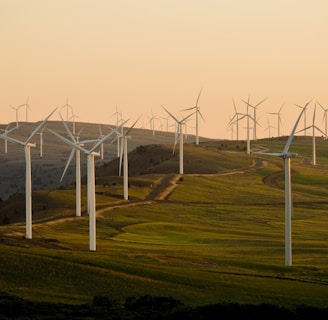
In 2024, the world added 585 gigawatts of renewable power capacity, a record accounting for 92.5% of all new generation installed globally. Solar alone contributed 452 GW. Wind added another 113 GW. By the end of the year, renewables made up 46% of installed power capacity worldwide.
The numbers suggest unstoppable momentum. The reality on the ground tells a different story.
Across the United States, 2,600 GW of generation sit in interconnection queues, with median wait times approaching five years. Across 16 European Union member states and the United Kingdom, 1,700 GW of renewable and hybrid projects remain stuck in grid connection processes. Globally, the figure exceeds 3,000 GW. Google has reported potential grid connection delays of up to twelve years for new data center facilities.
The gap between what gets built and what gets connected defines the strategic landscape of 2026. This is no longer a generation problem. It is a system problem and the organizations that treat it as such will control the next cycle of value creation in energy.
The Market in 2026: Growth Under Pressure
Global electricity demand is set to rise by 3.7% in 2026, following 3.3% growth in 2025 more than double the rate of total energy demand growth. The International Energy Agency describes this as one of the fastest sustained expansion periods in over a decade.
China and India will drive roughly 60% of the increase in global electricity consumption over 2025–2026, with demand growth accelerating to 5.7% in China and 6.6% in India. But this is not an emerging-market story alone. In the United States, data center power demand is projected to reach 75.8 GW in 2026, up from 61.8 GW in 2025 and is on track to nearly triple to 134.4 GW by 2030.
The IEA projects that renewables will overtake coal as the world's largest source of electricity by 2026 at the latest, reaching approximately 36% of global power supplies against 32% for coal, coal's lowest share in a century. Wind and solar combined will approach 20% of global electricity generation, up from 15% in 2024. Renewables, natural gas, and nuclear together are expected to meet more than 90% of the increase in global electricity demand through the forecast period.
These are structural shifts, not cyclical ones. But they are unfolding against infrastructure that was designed for a different era and that mismatch is where the real strategic tension sits.
Three Friction Points That Will Define Winners and Losers
Grid Saturation
The grid is now the single most binding constraint on the energy transition. Deloitte's 2026 outlook states it plainly: the grid has moved to the center of the transition, and the next leap in renewable adoption will come not from generation but from the connective tissue that allows clean power to move reliably across regions.
The numbers support this. Global grid capital spending exceeded $470 billion in 2025, rising 16% year-on-year after a 15% increase the year before. The United States leads with $115 billion in grid investment, followed by China and the EU/UK at approximately 20% each. BloombergNEF's Energy Transition Investment Trends 2026 report recorded $483 billion in grid investment for 2025, up 17%.
Yet even with record spending, interconnection queues continue to grow. Rising equipment costs and inflation mean that higher investment is not fully eliminating physical grid infrastructure bottlenecks. Congestion charges, curtailment, and negative pricing are accelerating across every continent. In Europe alone, €7.2 billion worth of clean power was curtailed in 2024 in just seven countries, with €580 million in welfare losses and €4.3 billion in congestion management costs.
Transmission investment is growing at nearly twice the rate of distribution, driven by long-distance connections, new substations, and high-voltage direct-current projects. But supply chain bottlenecks, permitting delays, and labor shortages remain the primary choke points. Transformers that once had one-to-two-month order backlogs now see backlogs exceeding three years.
For any developer, utility, or investor making capital allocation decisions in 2026, the question is no longer "Can we build it?" It is "Can the grid take it, and when?"
Capital Reallocation Under Policy and Market Volatility
Global energy transition investment reached a record $2.3 trillion in 2025, up 8% from the prior year. Clean energy supply investment outpaced fossil fuel supply for the second consecutive year, with the gap widening to $102 billion. Under BloombergNEF's base-case scenario, average annual investment in the global energy transition is projected to reach $2.9 trillion over 2026–2030.
But the composition of that investment is shifting. Renewable energy investment fell 9.5% year-on-year in 2025, as changing power market regulations in China, the world's largest market introduced new uncertainty. Meanwhile, grid investment surged 17% to $483 billion, energy storage reached $71 billion, and electrified transport climbed 21% to $893 billion.
M&A activity in the power and utilities sector reflects this recalibration. Deal value rose approximately 57% from 2024 to 2025, and PwC expects this momentum to continue in 2026. But the nature of dealmaking has changed. Buyers are prioritizing assets that offer near-term capacity and predictable cash flows, while greenfield projects, subject to queue delays, permitting risk, and uncertain policy timelines are increasingly viewed as higher risk.
In the United States, Deloitte projects annual solar, wind, and storage additions between 2026 and 2030 could fall to a range of 30 GW to 66 GW, down from 54 GW to 85 GW under pre-legislative trajectories. New sourcing restrictions targeting foreign entities of concern in the supply chain are forcing developers to design pipelines with built-in flexibility, the ability to accelerate or pause projects depending on which incentives and sourcing rules apply at any given moment.
Capital discipline in 2026 is not about spending less. It is about spending with greater precision matching each dollar to grid readiness, policy windows, and supply chain availability rather than to pipeline volume alone.
Operating Complexity at Scale
Battery energy storage is scaling faster than most forecasts anticipated. Utility-scale battery storage additions reached 63 GW in 2024, a record, bringing total installed capacity to 124 GW globally. In the United States, operating storage capacity reached 37.4 GW by October 2025, a 32% year-to-date increase, with projections showing nearly 15 GW of new battery capacity to be installed in 2026 alone. Globally, stationary storage battery shipments are expected to grow 43% in 2026, following a 50% surge in 2025.
This is a necessary development, storage is the primary tool for managing intermittency and reducing curtailment but it introduces a new layer of operational complexity. Grid operators must now manage thousands of distributed energy resources, coordinate storage dispatch with real-time market conditions, and maintain system stability as coal and gas plants retire faster than firm replacement capacity comes online.
McKinsey's Global Energy Perspective 2025 frames the challenge directly: the world has completed the easy phase of the transition and must now tackle the harder work of decarbonizing heavy industry and managing high-inertia grids. Clean, firm power sources, geothermal, hydropower, nuclear are expected to grow at 3% per year through 2050, but they start from a small base. Fossil fuels are projected to retain 41% to 55% of global energy consumption by 2050 depending on the scenario.
The operational implication is clear: utilities and developers that treat their portfolios as collections of individual projects will be outperformed by those that operate as integrated systems, coordinating generation, storage, demand response, and grid access as a single, optimized architecture.
Three Strategic Axes for 2026–2030 Grid-Fit Strategy
The conventional approach to project development, identify a site, secure land, model returns, build is breaking down in an environment where grid access is the scarce resource. A grid-fit strategy inverts the logic: start with where the grid can absorb power, then work backward to site selection, technology mix, and capital structure.
This means evaluating projects not only on modeled IRR but on grid-fit criteria: queue position, proximity to planned transmission upgrades, availability of co-located storage, and alignment with regional load growth forecasts. In markets where over 3,000 GW of projects are stuck in queues globally, the ability to identify and secure grid-ready positions is a source of competitive advantage that compounds over time.
For utilities, the equivalent move is proactive infrastructure planning compressing what used to be ten-year grid plans into three-year cycles to match the pace of load growth and generation additions. This requires not only capital but institutional capability: the ability to coordinate across regulators, developers, and market operators in ways the system has not historically achieved.
Capital Discipline 2.0
The 2026 capital environment rewards precision over volume. With renewable energy investment declining in the world's largest market while grid and storage investment surges, the signal is clear: the market is repricing where returns are most reliable.
For developers, this means embedding optionality into every pipeline, the ability to shift between solar, wind, and storage configurations depending on which policy windows and grid slots are available. For investors, it means moving from deal-driven deployment to platform-driven strategies: building organizational capabilities in asset management, regulatory relationships, and digital operations that allow a portfolio to absorb and optimize multiple projects, rather than treating each transaction as a standalone bet.
The M&A landscape supports this shift. With deal value in power and utilities up 57% and BloombergNEF recording $99.1 billion in energy transition M&A in 2025, acquirers are increasingly buying operating platforms not just megawatts to gain scale, predictability, and the infrastructure to deploy capital faster than competitors.
Operating Intelligence
The third axis is the hardest to build and the most difficult to replicate. Operating intelligence is the ability to run a portfolio of generation, storage, and grid assets as a unified system using real-time data on weather, market prices, grid conditions, and asset health to optimize dispatch, maintenance, and contract structures continuously.
Australia offers an early template: with close to 10 GW of battery energy storage expected to be operational in its National Electricity Market by mid-2026, grid-forming battery capability has become a strategic requirement. In California, Texas, and Germany, utilities are deploying AI-driven analytics and automation tools to flatten peaks, balance intermittency, and maintain stability during demand surges.
Deloitte's 2026 outlook identifies battery storage and digital technologies as essential tools for integrating more renewables while keeping the grid reliable. But the deeper point is organizational: the utilities and developers that embed analytical capability into their operating model rather than outsourcing it to vendors or relying on periodic reporting will be the ones that capture the margin between system complexity and system performance.
The energy sector in 2026 does not lack ambition, capital, or technology. What it lacks, in many cases, is the structured clarity to match those resources to the right positions at the right time. That is where a private strategy firm creates the widest margin of difference.
